
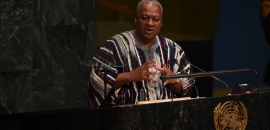
Mahama Heads to UN for Reparatory Justice Talks
Mar 23, 2026
by Ekow Benyah Mar 26, 2026
Three Countries Oppose Ghana-Led UN Resolution on Transatlantic Slave Trade
March 25,2026
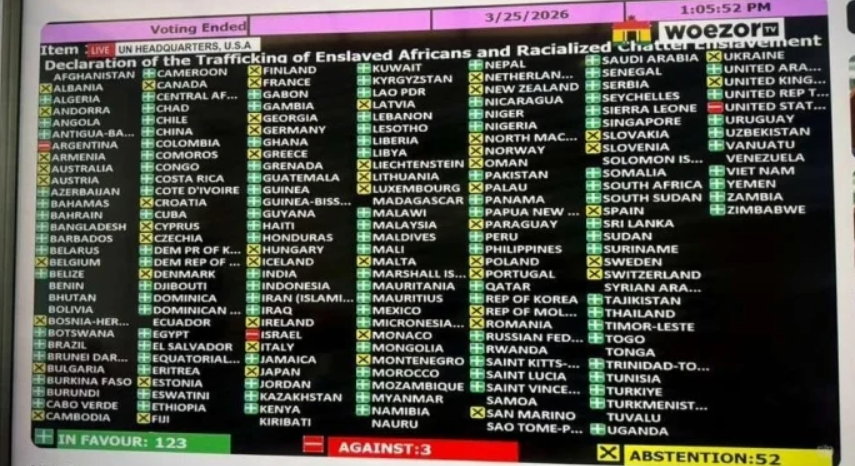
The United States, Israel and Argentina have voted against a Ghana-sponsored resolution at the United Nations General Assembly recognising the transatlantic slave trade as “the gravest crime against humanity.”
The resolution, which was led by Ghana, secured overwhelming support with 123 member states voting in favour. It calls on countries to acknowledge the lasting impact of slavery and consider measures such as formal apologies and reparative justice.
Despite broad backing, the three countries that opposed the motion raised concerns about its wider implications. The United States argued that the resolution could create a hierarchy among crimes against humanity, potentially affecting established international legal interpretations.
U.S. representative Dan Negrea also criticised what he described as the use of historical injustices to influence present-day resource allocation.
Israel expressed similar reservations, while Argentina also voted against the resolution, though it did not provide extensive public justification during the session.
The opposition contrasts sharply with strong support from African and Caribbean nations, which have consistently advocated for global recognition of slavery’s enduring consequences and the need for reparatory action.
Ghana, which spearheaded the initiative, maintains that the legacy of the transatlantic slave trade continues to shape global inequalities, including racial and economic disparities.
Although the resolution is not legally binding, it carries significant political weight and is widely seen as a step forward in advancing international discussions on reparations and accountability.
The vote also highlighted divisions among Western nations, with the United Kingdom and several European Union member states opting to abstain, reflecting a cautious stance on the growing global push for reparative justice.

Mar 23, 2026

Feb 28, 2025
May 10, 2025
Oct 20, 2025

Mar 23, 2025

Mar 01, 2025

Apr 28, 2025

Apr 07, 2025
